

Time for another personal update. A lot shipped this fall.
Also: hello to the more than 1,000 of you who subscribed after my SpaceX essay in February! I’m guessing that’s why you’re here, so I’ll start there.
The SpaceX Archive
In my last update I mentioned SpaceX Foundation, a book I was putting together from SpaceX’s early company updates. The book is now printed. And today the archive behind it goes online, free:
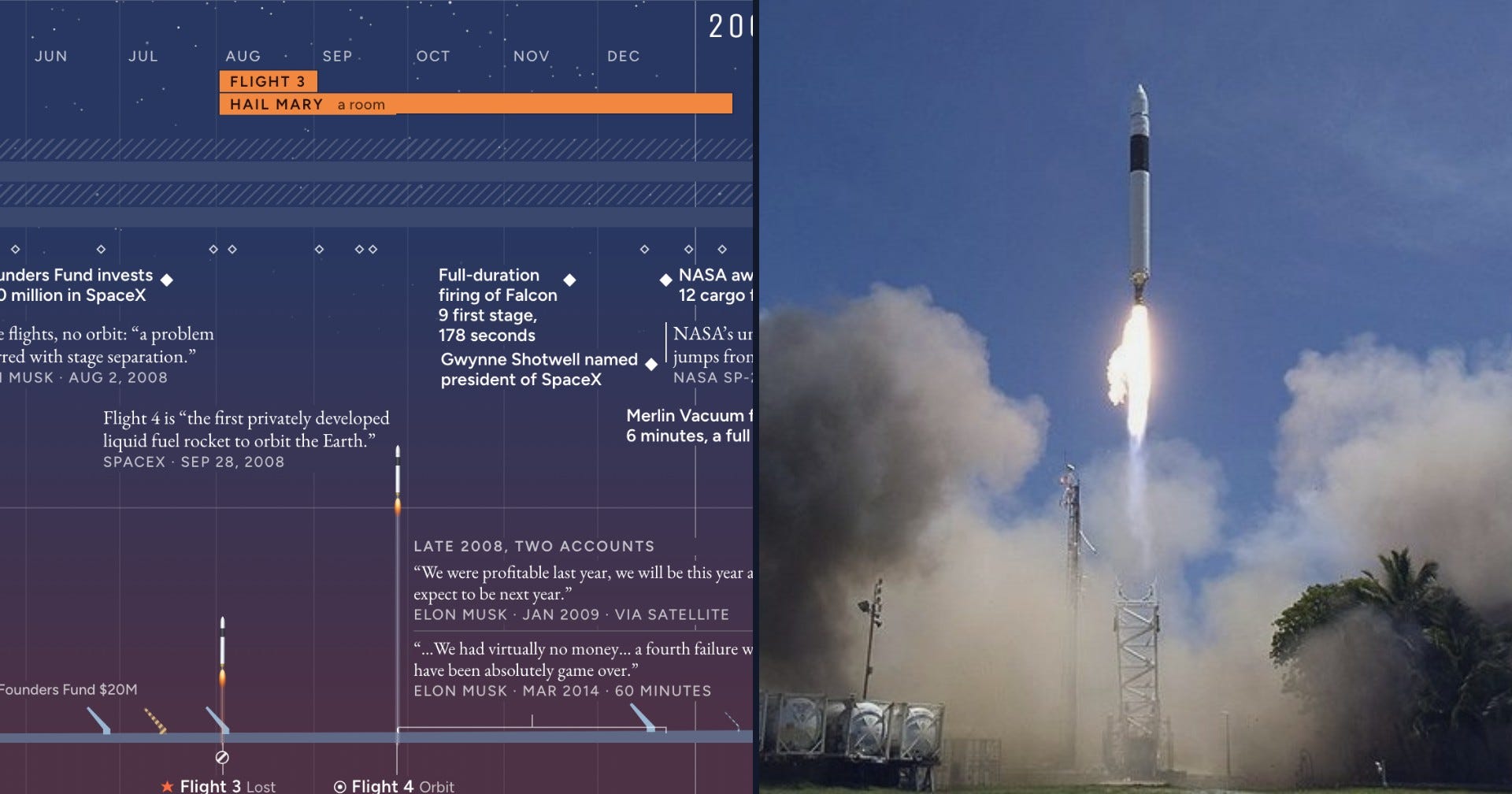
Between 2002 and 2013, SpaceX posted an update almost every time something happened. Musk wrote most of the first five years himself. It’s one of the best primary records of building a hard company that exists. But a lot of those pages now sit behind dead links.
So I put them all back in one place. A plain archive felt like a waste of a great story though... The SpaceX site is my first try at a new medium I’ve wanted to explore for a while: a digital museum.
Picture a real museum. You walk from room to room, and each room tells one story with the real artifacts. Now add what only a computer can do. You can search every document by meaning, see a whole decade at once, and step inside the moments themselves. Audio, visuals, everything.
What’s there:
The timeline. The whole decade on one screen, 632 events. Click any one to open its source.
173 documents, in full. That includes 120 company updates, 43 press articles from the time, and Musk’s testimony to Congress.
Search by meaning. Ask “why did the first launch fail?” in plain English.
Four “rooms.” Each tells one story, minute by minute.
The rooms are my favorite part. In Hail Mary, three Falcon 1s have failed and there’s money for one more. You sit in a 3D rebuild of the control trailer for Flight 4 and watch it happen. You can also replay the Dragon docking by the clock, walk through seven failures and how each got fixed, and try to land Grasshopper yourself. (It’s harder than it looks.)
The book itself is still a small private printing: 428 pages, cloth-bound. If you’d want a copy someday, hit “Keep me posted” on the book page. It tells me how many of you are out there.
The Berkshire Archive
Last time I also wrote about the Berkshire Memorex, my experiment in making Buffett’s letters searchable with AI. It grew up and moved to a new home: berkshireletters.com.
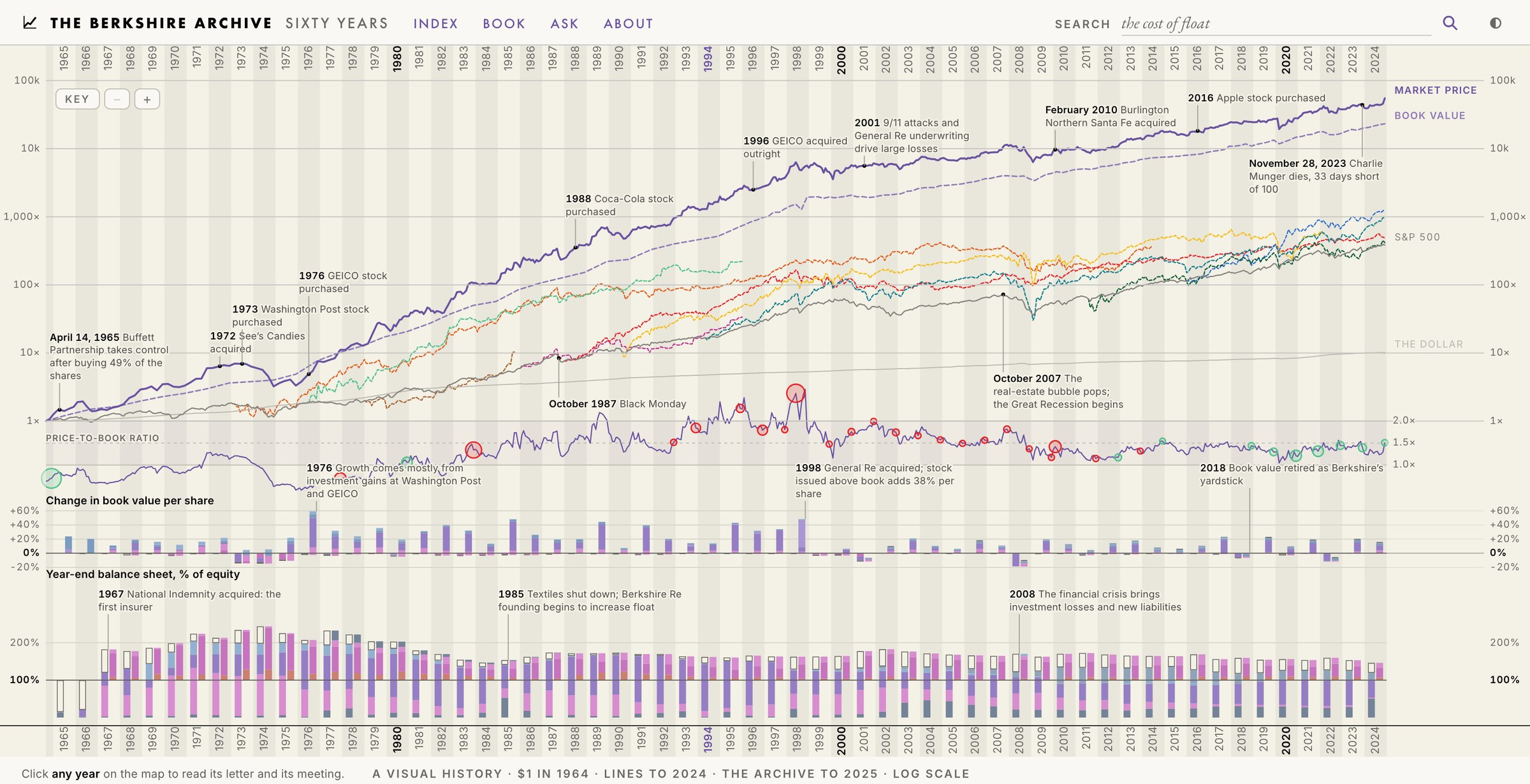
It’s the same kind of archive as the SpaceX site, minus the rooms (for now). Here’s what’s there:
The chart. 60 years of Berkshire vs. the S&P 500, with the big investments and events marked.
Every letter (1965-2024) and every annual meeting transcript (1994-2025).
One search box for all of it. Simple questions work.
Ask ChatGPT or Claude. Point your AI at the letters and get Buffett’s exact words, the year, and a link to check. No more made-up Buffett quotes!
The 60th anniversary edition of the book is out too. All sixty letters in one volume, 968 pages. It’s a brick. Get it here →
Wait, what’s Explorist?
Both archives are Explorist productions. If you’re new here, Explorist is my media company. It tells stories of people building a better future.
For years, Explorist was basically “the company that publishes the Berkshire letters book.” I’m bringing it back to life, with a new home at explorist.io.
A few years ago I wrote that the key to faster progress is culture: people have to want more. Stories are how that wanting spreads. So Explorist makes things meant to be kept and revisited. Books, archives, audio, posters, and now museums.
I have big ambitions for it. These two archives are a start. Long term, I want Explorist to be a defining media company for people who build things, one that makes ambitious builders the heroes. Right now Explorist is a reflection of my own interests. Over time, I want it to become a home for many creators and many stories, both true and imagined.
What’s next
Building fast. A series of stories on how big things got built quickly, partly inspired by Patrick Collison’s Fast list. (The Empire State Building took 410 days. Disneyland took 366.) Each one will come as audio and as an illustrated/written version, so you can read or listen.
The Buffett Partnership letters. Buffett’s letters to his partners from 1957 to 1970, before Berkshire.
Blue Chip Stamps. A mini-book with the Blue Chip Stamps (the lesser-known sibling of Berkshire) letters written by Charlie Munger.
Explorist has its own email list now. New productions go there first, about four to six emails a year. If any of the above is your thing, join the Explorist list →
FutureBlind isn’t going anywhere. I’ll keep writing essays here, and I’ll post an update when there’s something new worth telling you about.
Thanks for reading, and welcome to all the new folks.
Max
This is so awesome, I love to see how AI has basically made the visual representation of history and financials so much cooler!